

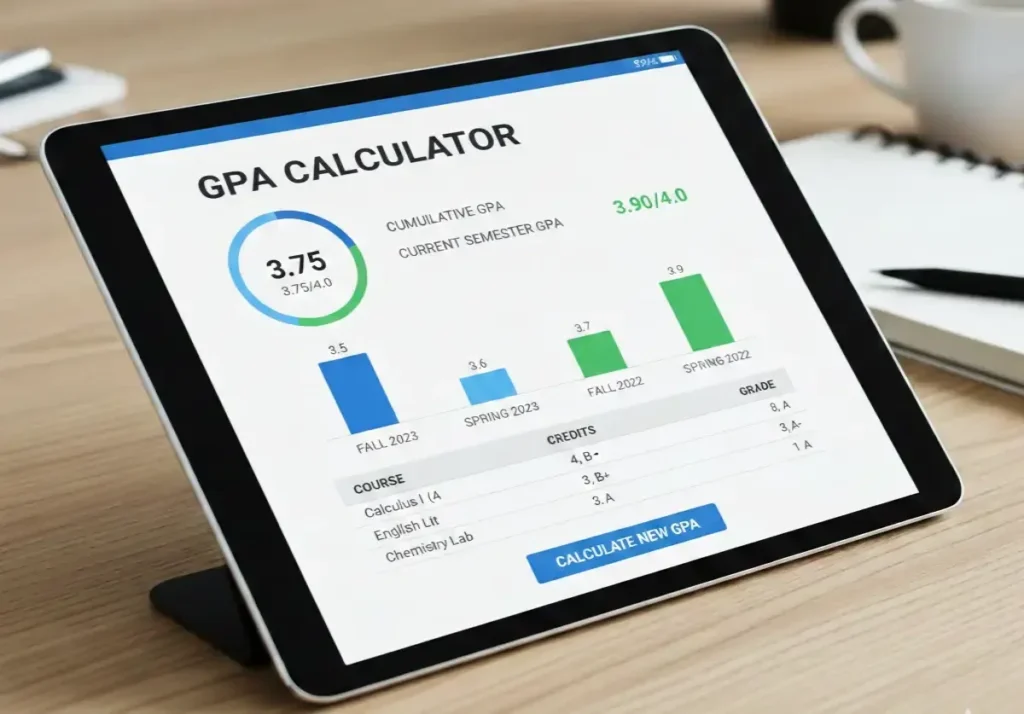
Grades matter—but figuring out what they actually mean can feel confusing. Different subjects carry different credits, grading systems change from school to school, and terms like “weighted” or “cumulative” GPA only add to the stress. Whether you are a high school student preparing for college, a university learner keeping scholarship requirements in mind, or a parent trying to understand report cards, knowing your Grade Point Average is essential.
That is why a GPA calculator has become one of the most useful academic tools online today. Instead of spending time doing complicated math or worrying about small errors, students can quickly estimate results, see patterns in performance, and make smarter academic plans. In this guide, we will break down how GPA works, why online tools make life easier, and how to use a GPA calculator correctly—without confusion or pressure.
Why GPA Matters in School and College
Your GPA is more than just a number printed on a transcript. It often influences:
- College admissions and transfers
- Scholarships and financial aid decisions
- Academic honors
- Internship and graduate school applications
- Personal goal setting and progress tracking
Schools in the United States, India, and many other countries use GPA—or similar systems—to evaluate performance. Because grading styles differ, students frequently struggle to convert marks into a standard format, such as the GPA scale 4.0. This growing complexity is exactly why tools that help calculate GPA online are becoming so popular among students and families.
The Challenge of Calculating GPA Manually
At first glance, GPA calculation seems simple: turn grades into numbers and average them. But in real life, it rarely stays that straightforward.
You may face situations like:
- Some courses have more credits than others
- Honors or advanced classes using weighted scores
- Different GPA scales across institutions
- The need for a cumulative GPA calculator instead of just a semester one
- Converting percentages into letter grades
Even one small mistake can slightly change your final number—and that difference might affect eligibility for programs or awards. That is why many students now rely on an academic GPA calculator instead of trying to handle everything with a notebook or spreadsheet.
Using a GPA Calculator as a Practical Solution
A GPA calculator is an online tool that accepts your grades and credit values, applies the correct GPA calculation formula, and produces results almost instantly. Most modern tools are flexible enough to support different needs, including:
- College GPA calculator
- High school GPA calculator
- Semester GPA calculator
- Cumulative GPA calculator
- Weighted GPA calculator
- Unweighted GPA calculator
Rather than guessing or rechecking calculations multiple times, students can use a GPA tool online to get quick, dependable estimates that help with planning and long-term tracking.
How a GPA Calculator Works
Although these tools look simple on the surface, they follow a clear and logical process behind the scenes:
1. Enter Your Grades
You type in letter grades such as A, B, or C—or percentages, depending on what your school uses.
2. Add Credit Hours or Course Weights
Each subject may have a different credit value. Honors or advanced classes often include extra weight.
3. Convert Grades to Points
The calculator applies a standard scale—most commonly the GPA scale 4.0—to transform grades into numerical values.
4. Apply the Formula
Each grade point is multiplied by its credit value, added together, and divided by the total credits.
5. Display the Result
Your GPA appears instantly for the semester or across multiple terms.
Some calculators also include helpful extras like a GPA percentage converter or future-grade projections, making it easier to set realistic academic goals.
Benefits of Using an Online GPA Tool
Saves Time
You can calculate results in seconds instead of doing lengthy manual math.
Reduces Errors
Automation minimizes the risk of calculation mistakes.
Works for Different Systems
Whether you need a weighted GPA calculator or an unweighted GPA calculator, most tools adapt to different formats.
Helps With Planning
Students can explore “what-if” scenarios—such as how raising one grade could improve the overall GPA.
Beginner-Friendly
You do not need strong math skills to understand or use the results.
Because of these advantages, GPA calculators are now common companions for students from early high school all the way to postgraduate programs.
Real-World Use Cases
A GPA calculator is not just for checking final scores at the end of the term. Many people use it throughout the year:
- College Applicants: Estimating GPA before submitting forms
- Scholarship Seekers: Checking whether they meet minimum requirements
- High School Students: Tracking improvement each semester
- University Learners: Monitoring cumulative GPA to stay on track for graduation
- Parents and Counselors: Gaining clarity when guiding students
Since GPA can influence major academic decisions, having a dependable way to calculate GPA online brings reassurance and transparency.
Practical Tips for Getting the Best Results
To make sure your numbers are accurate, follow these simple tips:
- Use the correct grading scale for your institution
- Double-check course credit values
- Know whether your classes are weighted
- Separate semester and cumulative calculations
- Update results regularly after each term
If your school uses percentages, a GPA from grades feature or a GPA percentage converter can save time and prevent errors.
Common Mistakes to Avoid
Even with a calculator, a few missteps can affect results:
- Mixing grading systems in the same entry
- Forgetting to include credit hours
- Treating estimated grades as final ones
- Confusing weighted and unweighted GPAs
- Rounding too early during calculations
Avoiding these mistakes helps ensure the final number truly reflects your academic performance.
Understanding the GPA Calculation Formula
While tools handle the heavy lifting, knowing the basic idea behind GPA calculation builds confidence.
The most common formula looks like this:
(Grade Points × Course Credits) ÷ Total Credits
For example:
- A (4.0) in a 3-credit class
- B (3.0) in a 4-credit class
(4.0 × 3) + (3.0 × 4) = 12 + 12 = 24
Total credits = 7
GPA = 24 ÷ 7 = 3.43
A GPA calculator performs this instantly, especially useful when you have several courses with different weightings.
Why Tools-Based Websites Are Helpful for Students
Online educational tools simplify everyday academic challenges. From budgeting to grade tracking, calculators remove guesswork and save time. When designed responsibly, they focus on genuine student needs rather than exaggerated promises—making them trustworthy companions for long-term planning.
Exploring a website that offers several student-focused tools can make managing academics feel less overwhelming and far more organized.
Final Thoughts: Use a GPA Calculator to Stay Informed and Confident
Your grades represent months of hard work, and understanding them should feel empowering—not stressful. A reliable GPA calculator turns raw scores into clear insights, whether you are using a college GPA calculator, a high school GPA calculator, or a cumulative GPA calculator to follow your academic journey.
By entering accurate data, avoiding common errors, and reviewing results regularly, you can make smarter decisions about your studies and future goals.