
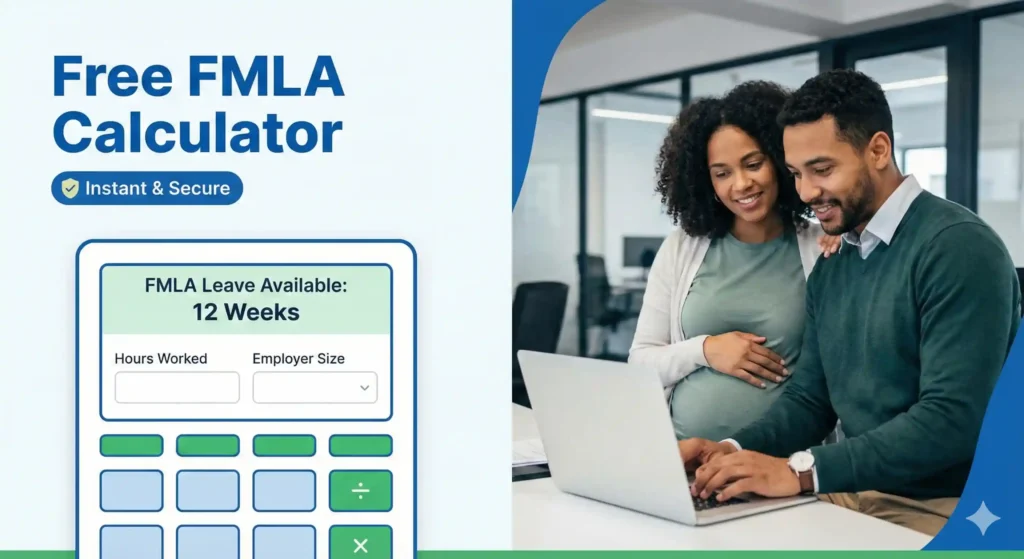
FMLA Calculator
Calculate eligibility, hours bank, and leave dates.
How Eligibility Works
To be eligible for FMLA, an employee must meet specific criteria regarding their tenure and hours worked.
Disclaimer: This calculator is for informational purposes only and does not constitute legal or HR advice. FMLA laws can be complex and subject to employer-specific policies (e.g., rolling year vs calendar year). Consult your HR department for official calculations.
Free FMLA Calculator: Check Eligibility and Track Your Leave Balance
Open with the stress of a medical emergency or a new baby. The last thing an employee needs to worry about is the math behind their job protection.
The Solution: Introduce the Free FMLA Calculator as a tool to instantly determine if you qualify for leave and how many hours you have remaining.
Key Problems Solved: Briefly highlight that the tool handles:
- Core Calculations: Determining the 12-week entitlement based on your schedule.
- Eligibility Checks: verifying the “1,250 hours worked” rule.
- Additional Benefits: Reminding users of job security and health insurance rights
How Our Free FMLA Calculator Works (Core Calculations)
Explain that FMLA isn’t just “12 weeks off”; it’s a math equation based on how much you work
Calculating the 12-Week Entitlement:
Explain the standard rule: 12 workweeks of leave in a 12-month period.
The Part-Time Math: Explain how the calculator adjusts for part-time employees. (e.g., If you work 30 hours/week, your 12 weeks = 360 hours, not 480).
Tracking Intermittent Leave:
- Define intermittent leave (taking leave in blocks or reducing daily hours).
- Explain how the tool subtracts these small increments (like doctor’s appointments) from the total “bank” of hours so you don’t run out unexpectedly.
The “Rolling” 12-Month Period:
Address the most confusing part of FMLA math. Explain the difference between a “Calendar Year” and a “Rolling Backward” year (where each day you take leave, the calculator looks back 12 months to see if you have available time).
Eligibility and “Affordability” Checks: Do You Qualify?
Before calculating how much leave you have, you must calculate if you can get it.
The 1,250 Hours Rule:
Explain the strict requirement: You must have worked 1,250 hours in the 12 months prior to the start of leave.
Crucial Detail: Clarify that PTO, holidays, and sick time do not count toward this number. Only “hours worked” apply.
Financial Affordability (Unpaid Leave Planning):
FMLA is unpaid job protection. Use this section to explain how the calculator helps users estimate their lost wages.
Suggest using the tool to plan: “If I take 6 weeks of FMLA, I need to save $X amount to cover my bills.”
The “50/75” Rule:
Briefly mention the employer requirement: 50 employees within a 75-mile radius.
Additional Benefits of FMLA Protection
Why go through the trouble of calculating FMLA? Because the protections are powerful.
Step-by-Step Guide to Using This Tool
Select Your Work Schedule: Input your average hours per week (e.g., 40, 32, or variable).
Input Past Leave: Enter any FMLA time taken in the last 12 months.
Check Eligibility: Input your total hours worked in the past year to see if you hit the 1,250-hour mark.
Calculate Balance: Hit the button to see exactly how many hours/weeks you have left to use today.
Frequently Asked Questions (FAQ)
Q: Does my paid vacation count toward the 1,250 eligibility hours? (Answer: No, only actual hours worked count).
Q: Can I use FMLA for shorter shifts (Intermittent Leave)? (Answer: Yes, and our free FMLA calculator helps you track these small deductions down to the hour).
Q: Is FMLA paid? (Answer: No, FMLA is unpaid, but it protects your job. You may be able to use accrued PTO concurrently to get paid).
Conclusion
Reiterate that FMLA is a vital safety net for workers, but the tracking rules are complex.
Call to Action (CTA): “Don’t guess with your job security. Scroll up and use the Free FMLA Calculator to ensure you are eligible and tracking your leave correctly.”