
Valuation Calculator
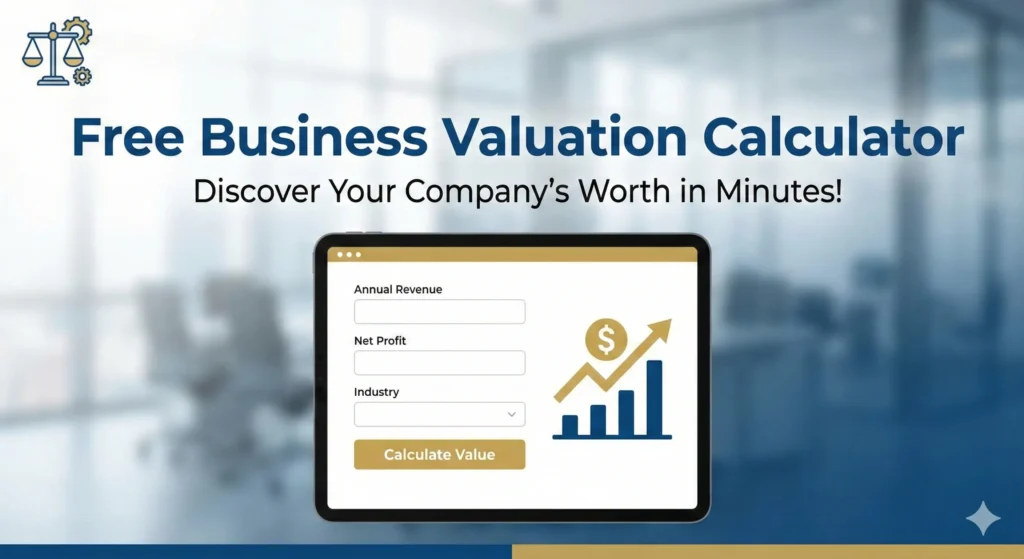
Estimate your business worth using the EBITDA multiplier method.
Estimated Valuation
Estimated Range: $0 – $0
Applied Multiple
0x
Profit Margin
0%
Note: This valuation is calculated based on your EBITDA multiplied by an industry-standard factor, adjusted for your growth rate and net assets. This is a preliminary estimate for informational purposes only.
Free Business Valuation Calculator: Estimate Your Company’s Worth Instantly
Introduction Hook: Start with the critical question every owner asks: “If I sold my business today, how much would I get?”
The Solution: Introduce the Free Business Valuation Calculator as a quick, non-intrusive way to get a baseline valuation without paying thousands to an appraiser.
Key Problems Solved: Briefly mention the tool helps with 1) Determining a listing price, 2) Checking retirement readiness, and 3) identifying growth gaps.
How to Use This Business Valuation Tool (Step-by-Step)
Intro: A simple walkthrough to ensure accuracy.
Gathering Your Financial Data:
- List the documents needed (P&L statement, Tax returns).
- Explain why accurate data is crucial for the “Core Calculations.”
Inputting Key Metrics:
Revenue: Total gross sales.
SDE (Seller’s Discretionary Earnings): Explain this as “Net Profit + Owner Salary + Personal Expenses.” This is the industry standard for small businesses.
EBITDA: Define this for larger businesses (Earnings Before Interest, Taxes, Depreciation, and Amortization).
Selecting Your Industry Multiplier:
Explain how different industries (SaaS vs. Construction vs. Retail) have different valuation multiples.
Understanding the Core Calculations: How We Value Your Business
Intro: Demystify the math behind the result.
The Multiple of Earnings Method:
- Explain that most small businesses sell for 2x to 4x their SDE.
- Describe how the calculator applies this multiple based on the inputs.
Asset-Based Valuation vs. Income Approach:
- Briefly compare valuing a business based on what it owns (assets) vs. what it makes (income).
- Explain why this tool focuses on the Income Approach (which usually yields a higher, more accurate market value).
Adjusting for Growth and Risk:
- Discuss how a high year-over-year growth rate increases the multiplier.
Is Your Business “Exit Ready”? (Affordability & Gap Analysis)
Intro: This section addresses the “Affordability Check” equivalent for business owners—is the business worth enough to fund their next step?
The Retirement Gap Test:
- How to compare the calculator’s result against the owner’s “Magic Number” (the amount needed to retire comfortably).
- What to do if the valuation falls short (The Gap).
Debt Service Coverage:
- Explain that a buyer needs the business’s cash flow to pay for the loan to buy it.
- If the SDE is too low, the business is “unaffordable” to a buyer, even if the revenue is high.
Additional Benefits of Regular Valuation Checks
Why you should use this calculator even if you aren’t selling today.
Leverage for Business Loans:
- Knowing your current value helps when applying for expansion capital or lines of credit.
Partnership Buyouts:
- Provides a neutral starting point for discussions when one partner wants to exit.
Strategic Growth Planning:
- Use the tool to simulate scenarios: “If I increase my profit margin by 5%, how much does my exit value increase?”
Frequently Asked Questions (FAQ)
Q: How accurate is a free business valuation calculator? (Answer: It provides a “Ballpark Estimate” or range; a certified appraisal is needed for IRS/Legal purposes).
Q: What is the difference between SDE and EBITDA? (Answer: SDE adds back owner salary (common for Main St. businesses), EBITDA does not (common for larger M&A)).
Q: Does my business debt affect the valuation? (Answer: Usually, business sales are “cash-free, debt-free,” meaning the seller pays off debt from the proceeds, so the valuation is of the enterprise, not the equity).
Conclusion
ummary: Reiterate that knowing your worth is the first step to financial freedom.
Call to Action (CTA): “Don’t leave your future to guesswork. Scroll up to the Free Business Valuation Calculator and discover your company’s true market potential today.”